 Carboka Stories
IE+E | Could this work step be done better?
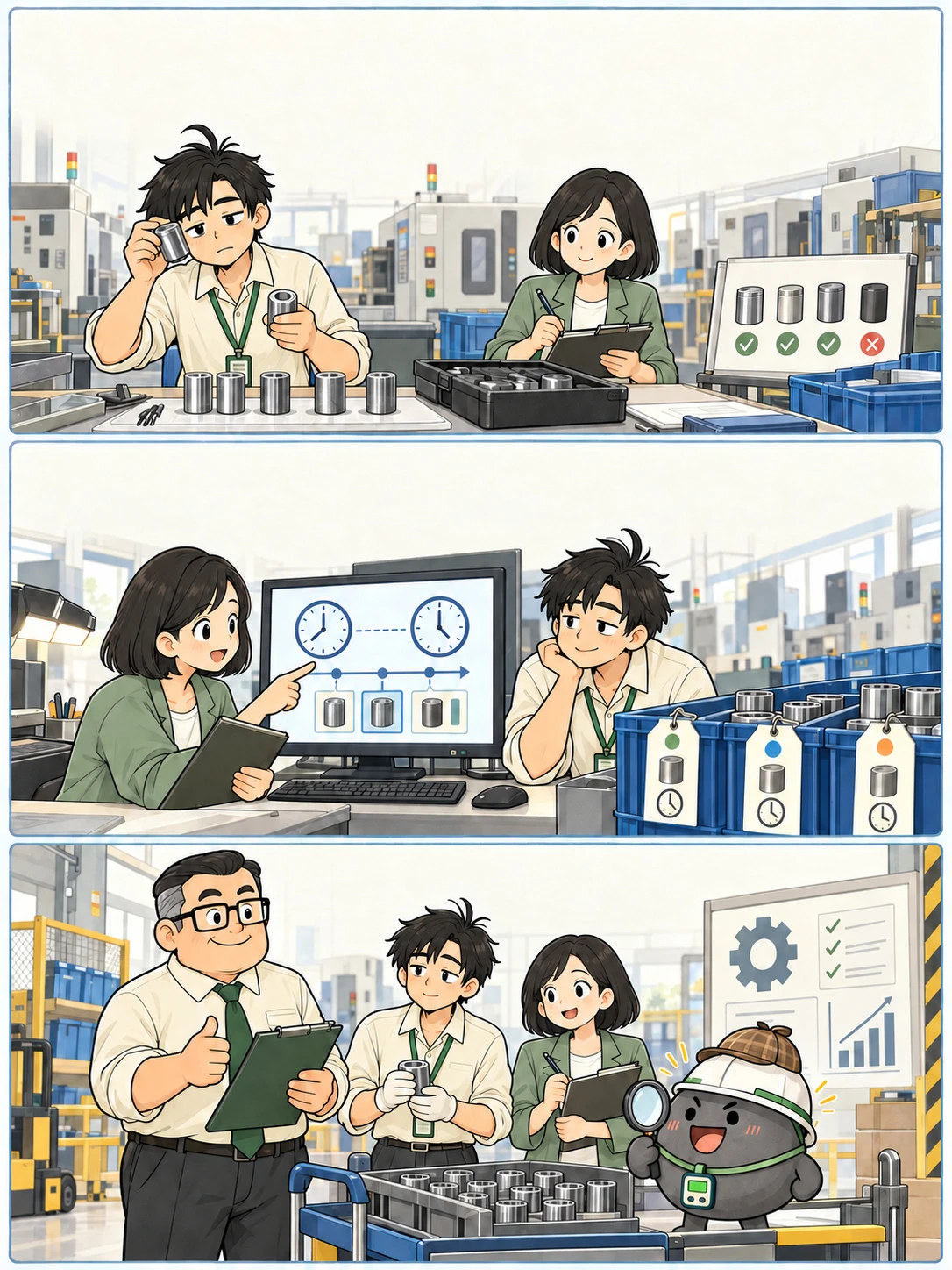
Put work time, movements, waiting and electricity on the same process map. The longest step may not use the most electricity. Brands and suppliers can choose a specific step to improve, agree on a trial and check the result together.
OEE+E | Faster production—but better quality and less energy too?
Read overall equipment effectiveness (OEE) alongside electricity per good unit. Use consistent definitions for operating time, speed and quality. The +E means considering energy alongside OEE—not adding kWh to a percentage. Higher OEE does not guarantee lower electricity per good unit.
TPM+E | Who should investigate this change?
A change in electricity use under otherwise similar conditions is a reason to investigate. Check for changes in product, load or measurement first, then ask maintenance staff to look into it. A curve alone cannot predict when a machine will fail.
ROI+E | Will the savings cover the investment?
List the equipment and integration costs, realistic savings and extra maintenance costs separately. Extra output only brings a cash benefit if it can be delivered and sold, with added costs deducted. Payback period and return on investment (ROI) answer different questions.
Pause here. What would you choose?
Brands want suppliers to improve. Which sentence is closer to IE+E’s approach?
Sources: Carbon × Kaizen whitepaper pp. 16–18, 25; story manuscript pp. 13–15, 34–35. This adapted story uses teaching scenarios, not customer measurements or equipment operating instructions.