I want to cooperate, but I am really busy.
A-Qin
"Is there a simple version?"
A-Qin juggles work and everyday life. He asks the questions others are shy about—and discovers that you can help improve things without knowing all the jargon.

 Carboka StoriesCARBON × KAIZEN
Carboka Stories · Season 1
How much electricity goes into a good product?
Meet four characters who might remind you of your coworkers.
Follow their electricity journey, with a few laughs and small changes along the way.

For everyone doing their best each day
Air conditioning left on after a meeting, a product that keeps needing rework, an impressive-looking environmental claim… Carbon × Kaizen starts with everyday questions like these:Could we do the job well and get more value from every kilowatt-hour?
Season 1 · The electricity journey of a good product
Read in order, or choose a situation you recognize.
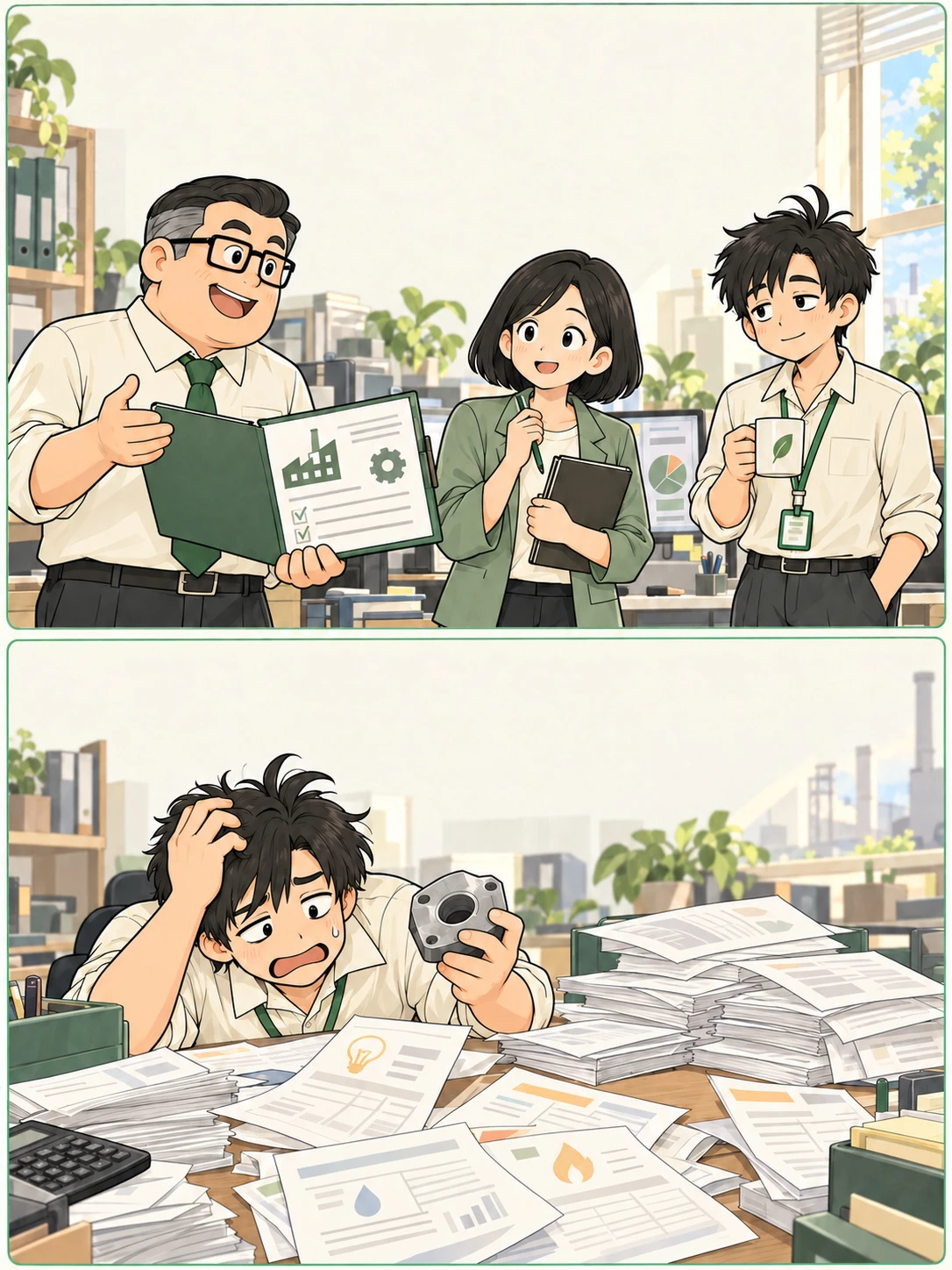 01
Ask the right questions first · About 3 minutes
A customer order gets A-Qin thinking: the factory's electricity bill doesn't tell him how much electricity went into one product.
Open this chapter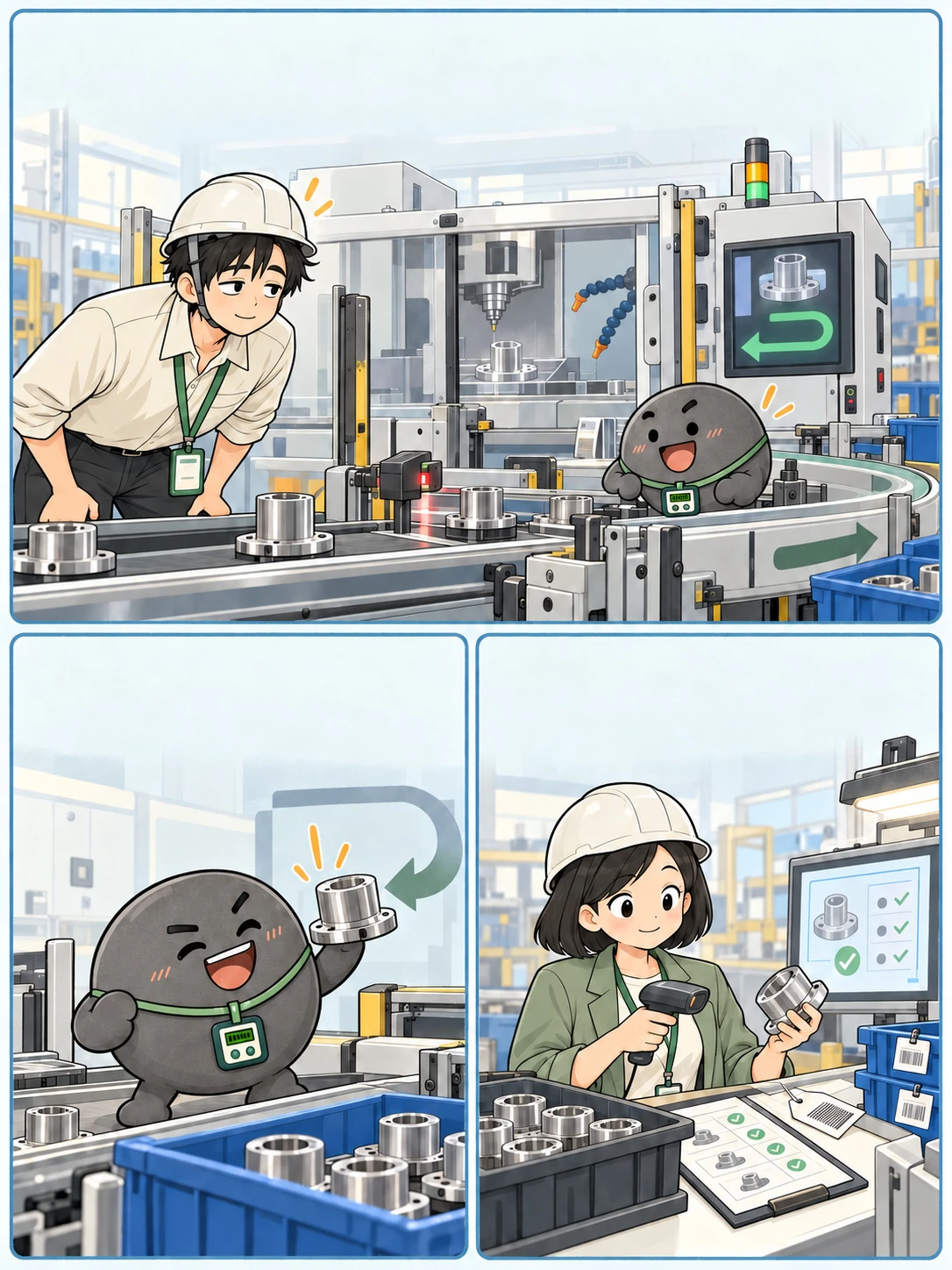 02
Rework also uses electricity · About 3 minutes
The machine counter says 1,200, but the warehouse has only 900 good units. Nobody has to be wrong: they are counting different things.
Open this chapter 03
Waiting and idling · About 3 minutes
Does a short stop always save electricity? The power curve can help you ask a better question than simply turning everything off.
Open this chapter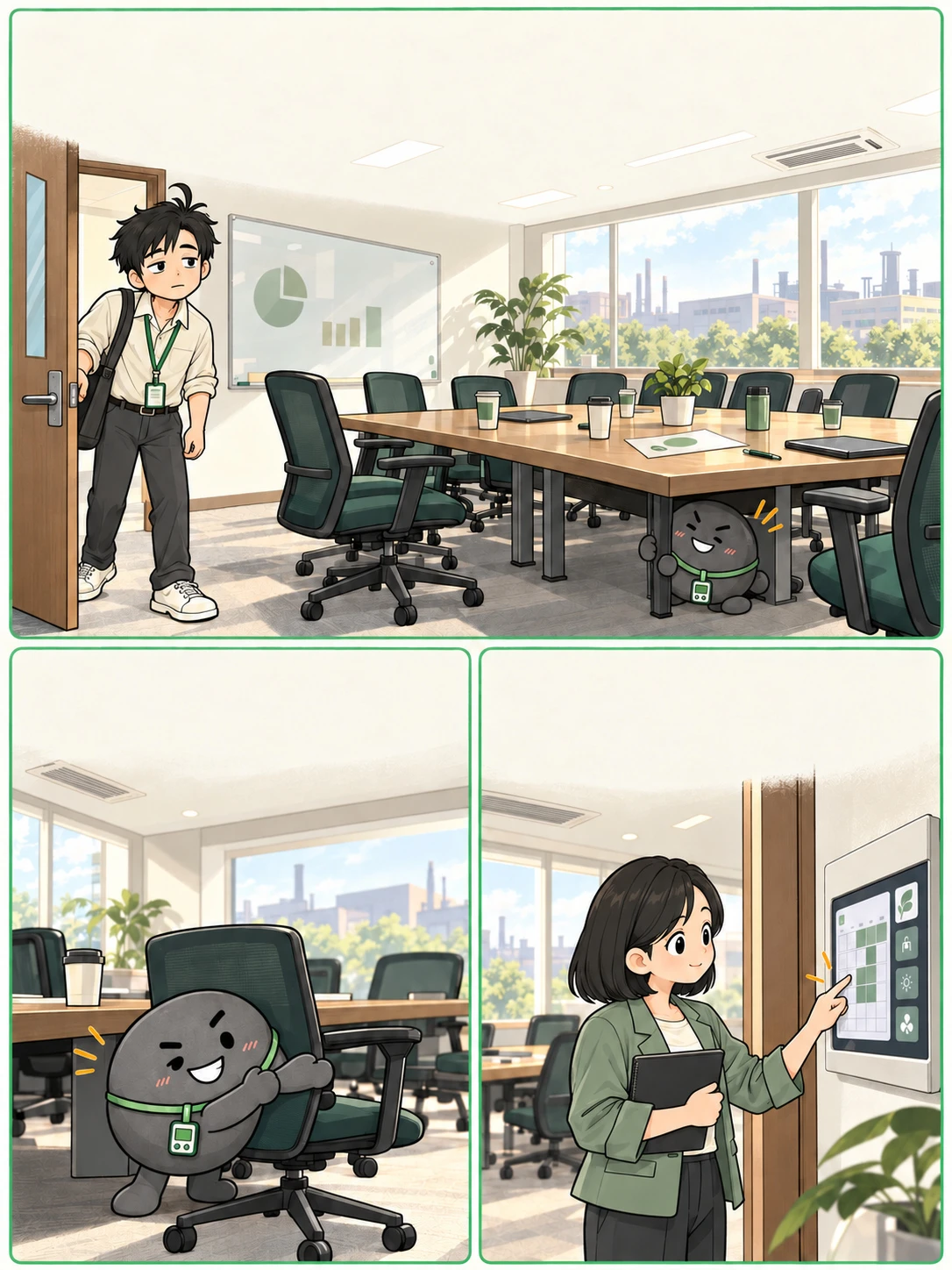 04
A story from your own workplace · About 2 minutes
It doesn’t matter if you don’t work in a factory. Conference rooms, offices and warehouses all have electricity stories worth asking about.
Open this chapter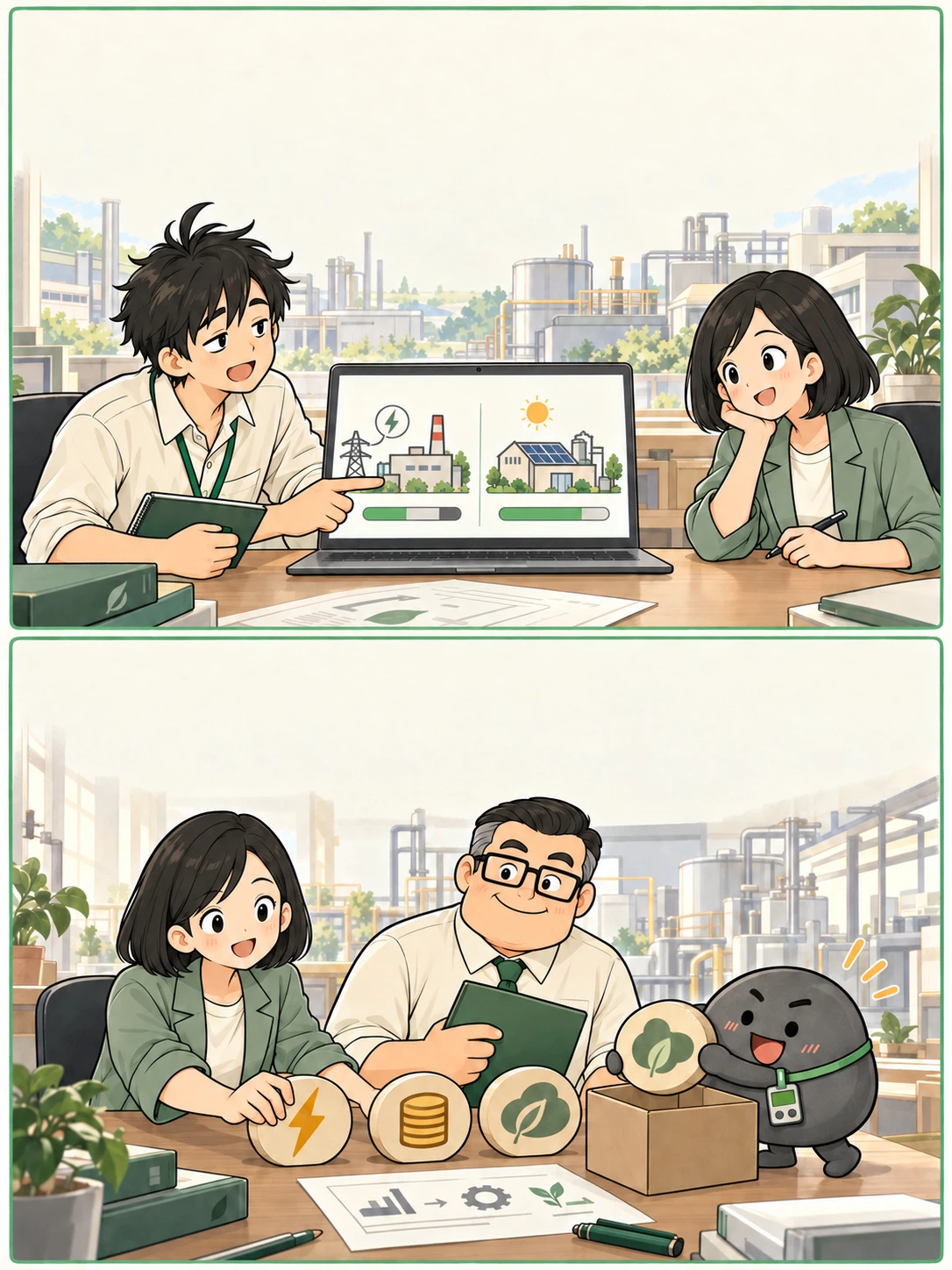 05
Separate the three accounts · About 3 minutes
Cheaper electricity doesn't mean less electricity. A different emissions factor also changes the emissions figure.
Open this chapter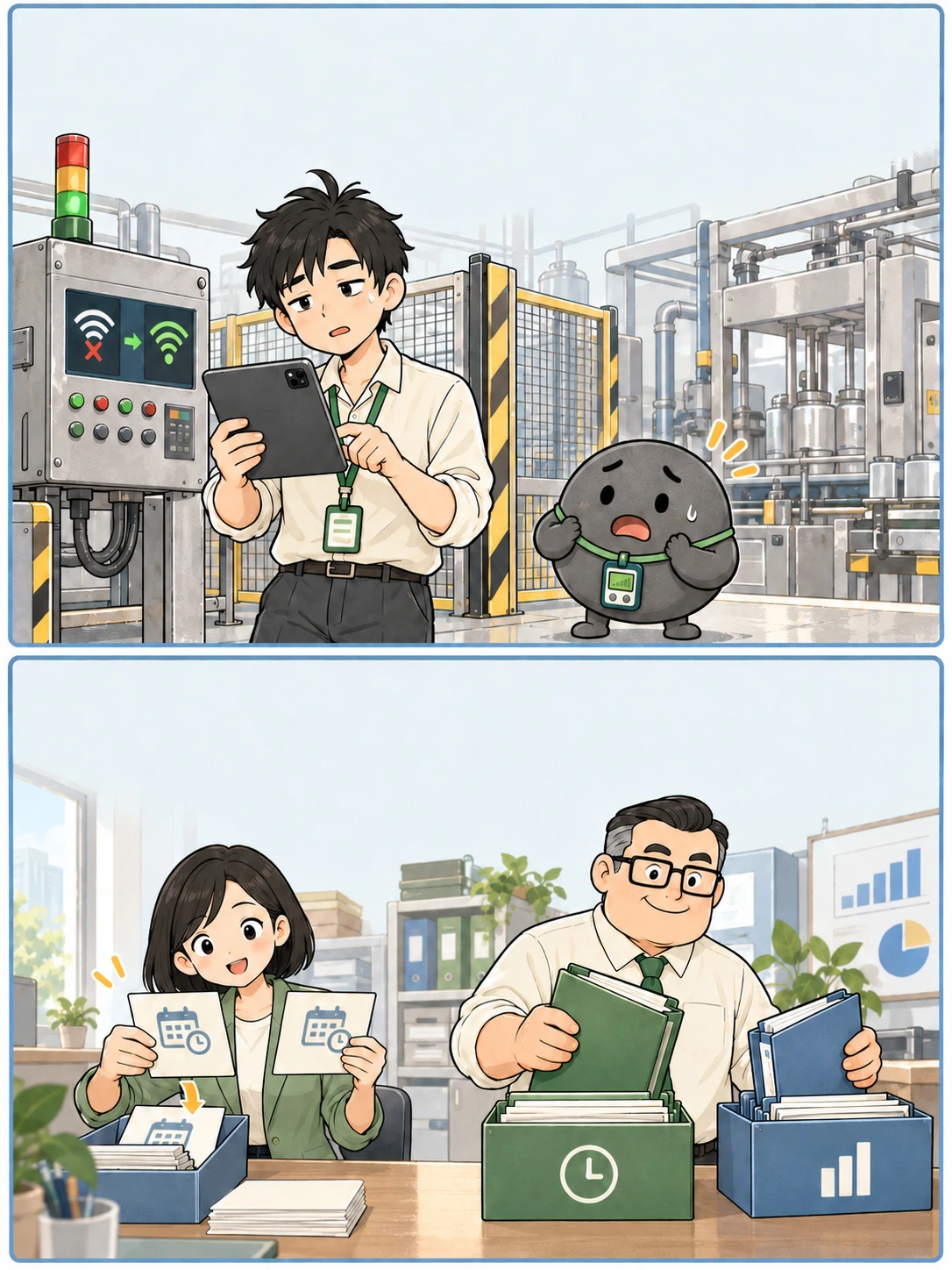 06
Turn feelings into evidence · About 3 minutes
A striking percentage gets attention. A claim backed by original records earns trust.
Open this chapter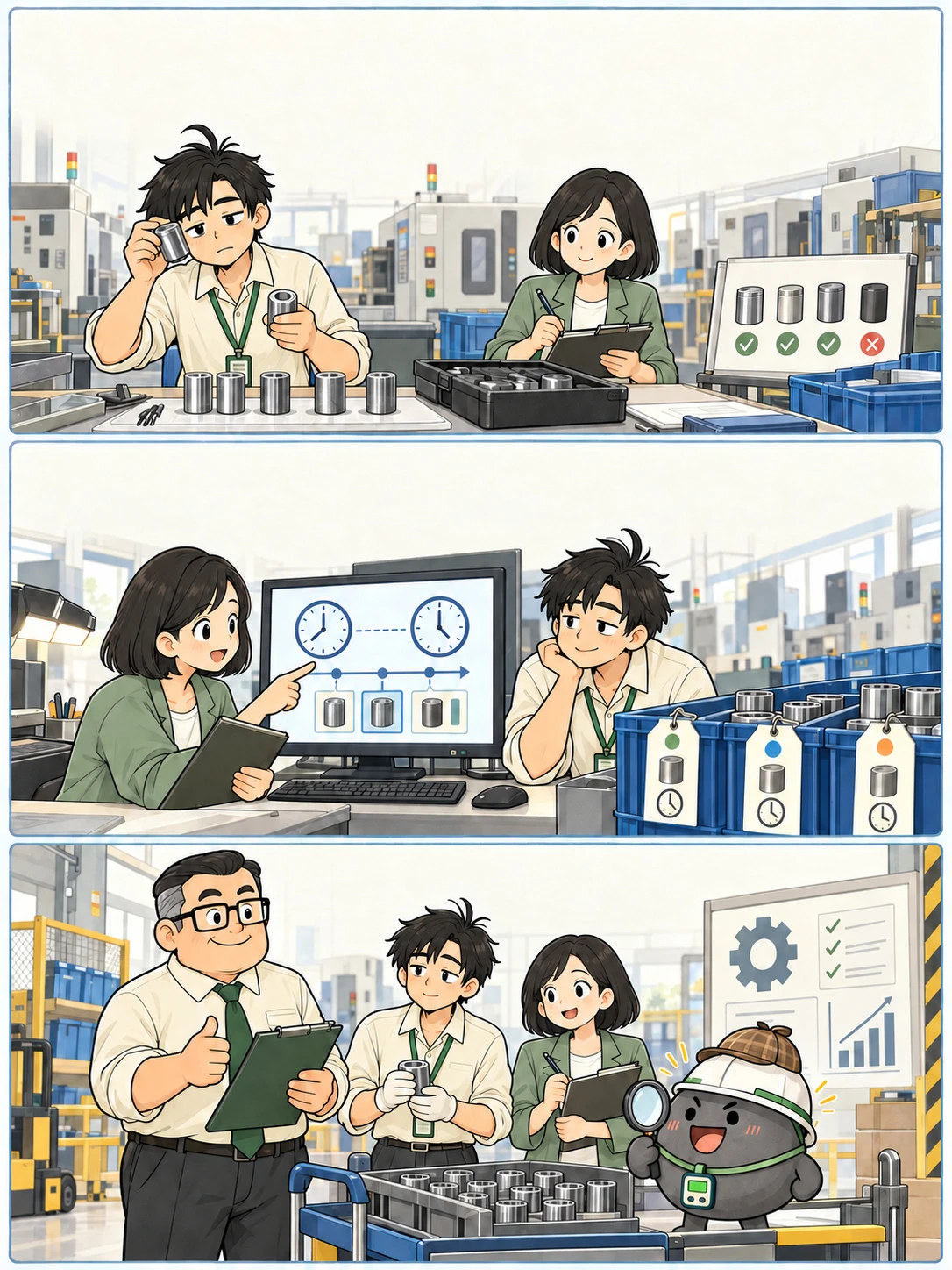 07
Four ways to put Carbon × Kaizen into practice · About 4 minutes
Forget the acronyms for a moment. Ask which work step could be better, then look at time, quality, electricity and evidence together.
Open this chapter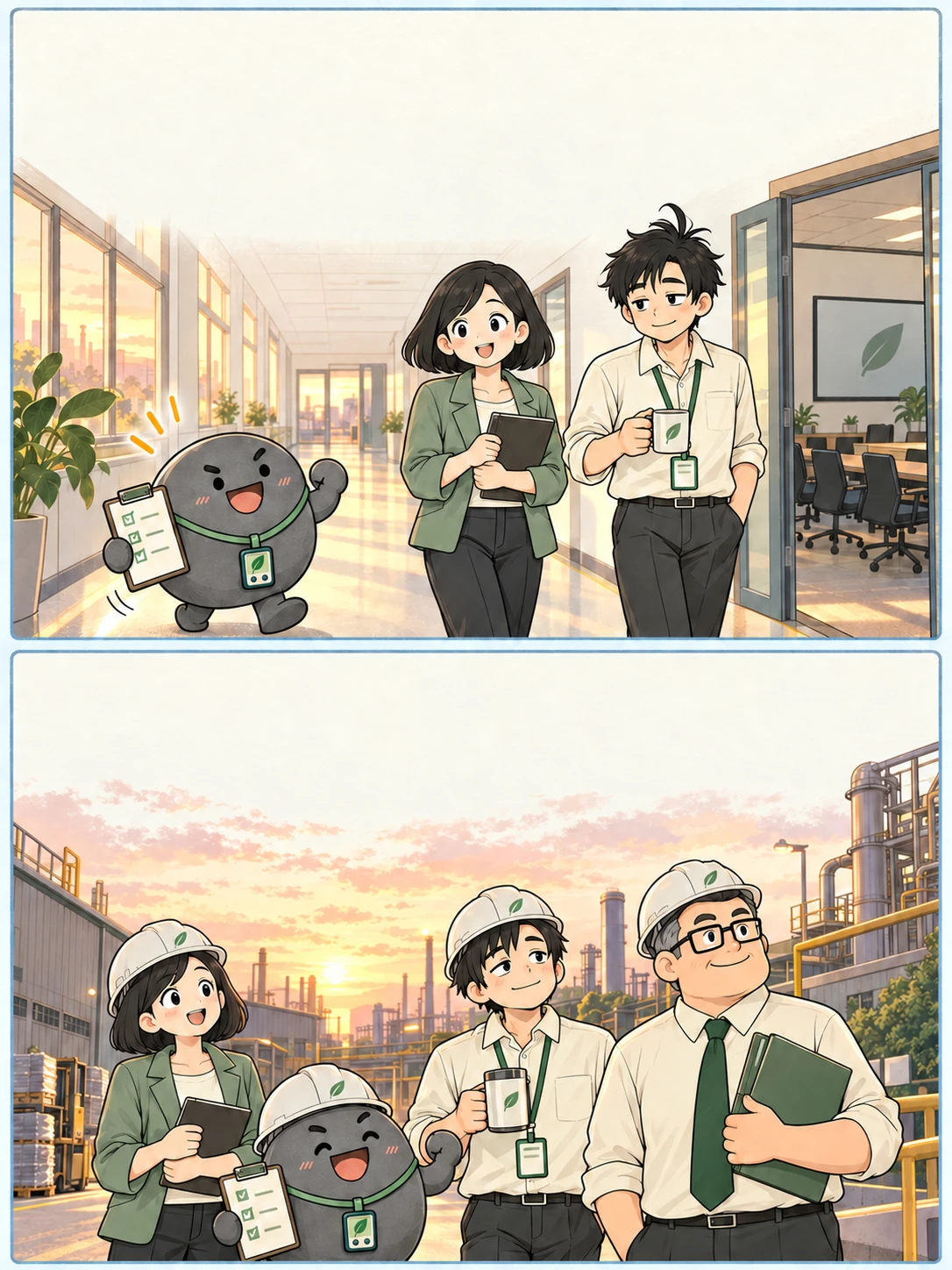 08
Keep small improvements going · About 2 minutes
By the end, nobody has become an energy expert. They are simply more willing to ask questions—and see one small change through.
Open this chapterMeet your companions
Who reminds you of yourself?
Perhaps a little of all four.
I want to cooperate, but I am really busy.
"Is there a simple version?"
A-Qin juggles work and everyday life. He asks the questions others are shy about—and discovers that you can help improve things without knowing all the jargon.
Turn big slogans into small actions.
"Just change one thing first."
Bu doesn't expect everyone to be perfect. She checks what's happening, breaks the problem into smaller steps and looks for a clear result from each trial.
What I fear most is that everyone will change their old habits.
“Haven’t we always done it this way?”
Tan lurks around waiting equipment, reworked products and empty rooms. He becomes visible only when he wears his own carbon watch—a fictional way to bring old habits into view.
Committed to change. Fond of another procedure.
"Let's have a meeting."
Manager Fang wants results, but he knows the team is stretched. He learns to give people time, resources and clear responsibilities—not just another report to fill in.
In the story, Tan becomes visible when he wears his fictional carbon watch. Real measurements still need instruments, data and checks at the workplace.
Bring stories back to daily life
Pick one situation you can observe, and talk it through with the person responsible.
Try the change and check what happened before announcing a result.